We drove across Northern California from the coast to Lake Tahoe. It was one of our longer days of driving and the landscape changed from coastal trees to very arid, to orchards and farm fields, back to tall trees. Mostly on twisty roads, but it was very pretty. Here are a couple of views along the way.
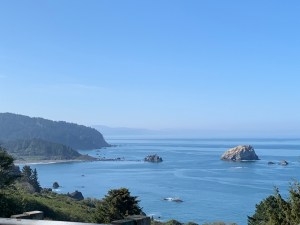
We began by taking the “101” south down the coast. We didn’t always get to see the ocean, but the views were breathtaking whenever we saw it. When it wasn’t in view there were trees and cliffs.
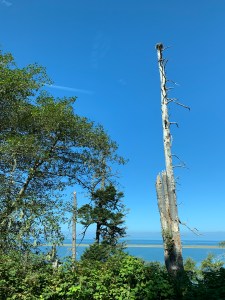
Bird nest on top of this dead tree.
We turned toward the west and the scenery quickly changed to less trees and more rocks.
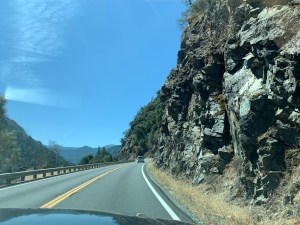
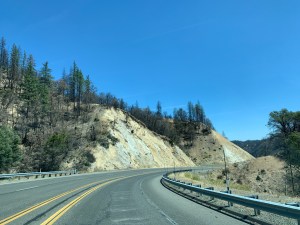
Soon the trees were mostly gone and the mountains got higher. We just curved around the mountain as we went higher up so you can see the road across the canyon/valley.
A huge wildfire went through this area the previous year. Miles and miles of burnet up trees. It’s was called the Carr Fire I think. One of the largest in California history.
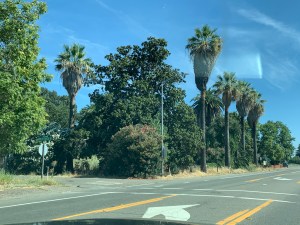
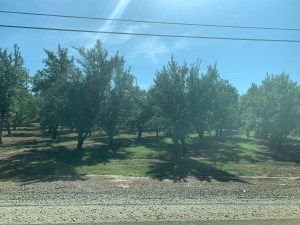
Then we entered the farming area of California which is all the way down the whole center third of the state.
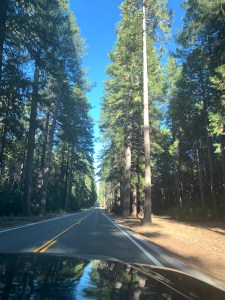
As we came closer to Lake Tahoe, the trees got tall again, this time most are Ponderosa Pine.
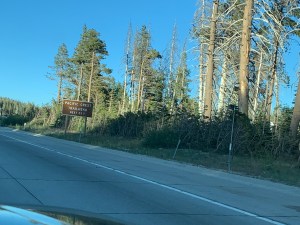
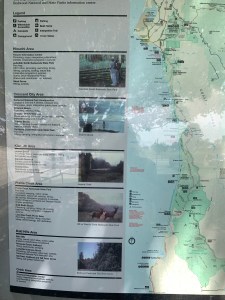
During this trip, I read Wild: From Lost it Found on the Pacific Coast Trail by Cheryl Strayed. Jeff read it previously too. So we were excited to see the sign for this trail.
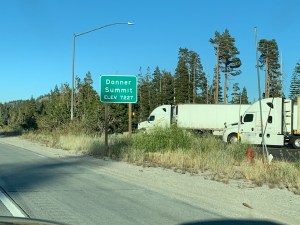
We also crossed the Donner Pass and Summit. A pioneer wagon train that ended very badly, and they didn’t necessarily die from Dysentery. I will let you look up the info about it if you are interested and have a strong stomach.
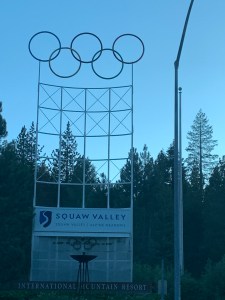
Tahoe hosted the Winter Olympics in 1960. The area has since been renamed as Olympic Valley.
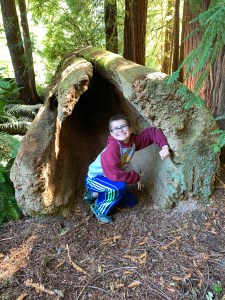
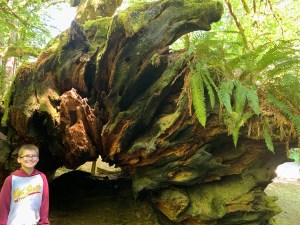
In the morning, Carson and I went for a walk around this amazing campground. It is second growth forest, which means that it was logged once and has been allowed to start returning to its natural state. You can see the ruins of the old huge giant Redwood trees everywhere. The trees growing around them are already very tall and large unless you compare to the ancient giants.
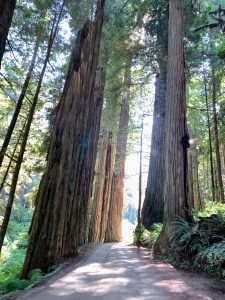
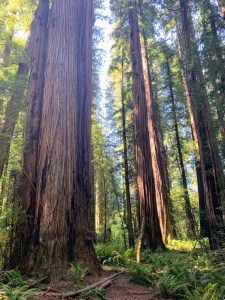
After a relaxing morning in the campground, we set off to find the old growth Redwoods. The scale of these trees are so hard to depict in photos unless you have something to compare to, and even then it’s beyond comprehension. The forest feels ancient, like a dinosaur could walk by at any time (Jurassic Park was filmed here btw). We drove on an old stage coach path turned driving trail through the trees and took a short hike so we could marvel at the ancient giants. We talked to a Park Ranger from Chicago for awhile about trees, the nearby beach and the Chicago suburbs.
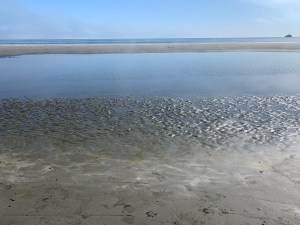
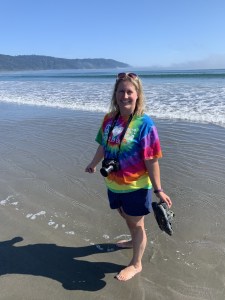
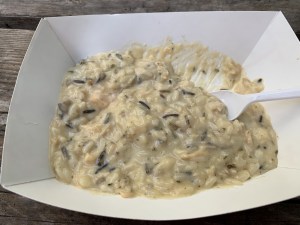
Then we headed to the beach. It was low tide and we had the beach almost to ourselves. No tide pools but fun waves and stones. We spent a fun hour exploring and then headed back to the campsite for chicken and rice for dinner and some relaxing time. I definitely want to come back to this area and do more exploring on a future road trip.
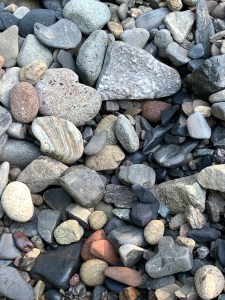
Stones for tossing.
This was right next to our campsite.
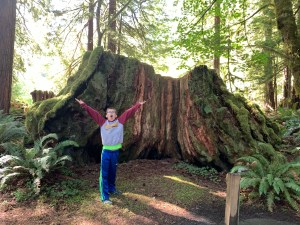
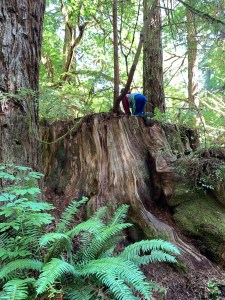
This tree was cut decades ago, the size it must have been boggles the mind.
This chipmunk is hoping for some handouts. Sorry, little guy! There are signs all over saying not to feed the animals or leave food out. They get dependent on the food and then can’t survive in the wild anymore, plus people food makes them sick. And more aggressive.
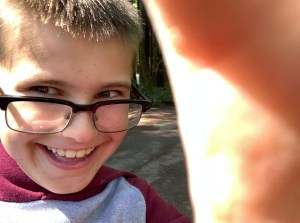
Carson stole my phone and took a selfie. Funny boy!
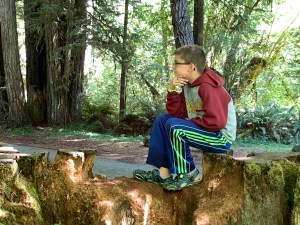
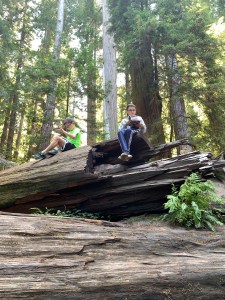
He wanted me to take a photo of him in “The Thinker” pose as he sat on top of a ancient Redwood stump.
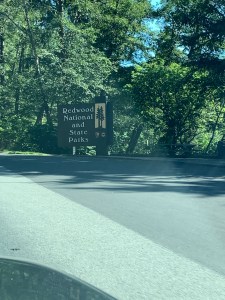
The Redwood National and State Parks is very unique in that the National Park Service and the State Parks are a partnership and interchangeable here. It is the only national park like this in the nation. Usually the National Parks are bordered by National Forests or state land, but they have different usage rights and are completely different entities.
The partnership (along with a Redwoods conservancy group) is allowing them to gradually purchase private land or receive donations of land with old growth forests and add to the park. Their goal is to create a more continuous ecosystem for the plants and animals.
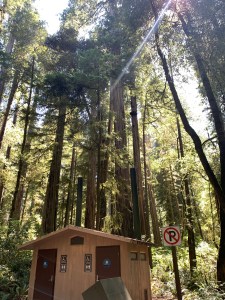
At the parking lot to the trail.
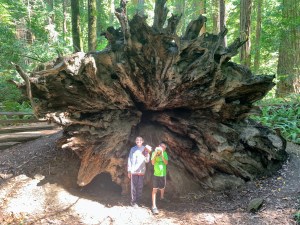
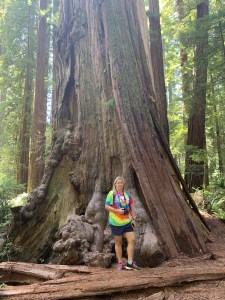
Jeff is 6’5”. The roots of this tree are double that. We learned that though the roots only go about 10ft down, they grow laterally as far as the tree is tall and weave amongst the trees nearby. So basically the trees support each other and keep each other upright.
The boys, especially Spencer, didn’t want to go on another hike at that moment and snuck their books with them. But the books came in handy when we were chatting with the ranger.
One of my favorite photos of Spencer. He can tune everything in the world out when he is reading.
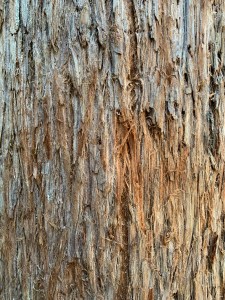
I believe this is the bark of a Douglas Fir. It is also in this forest, but has taken over in the second growth forests and blocking all the light so none of the trees can grow big and strong. So part of restoring the forest is thinning these trees out so more light can get to the forest floor.
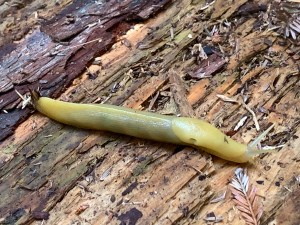
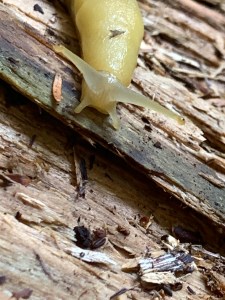
This is a banana slug. Isn’t it cute?
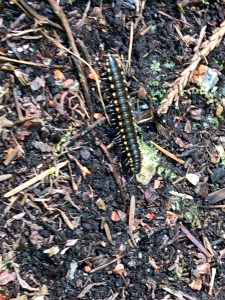
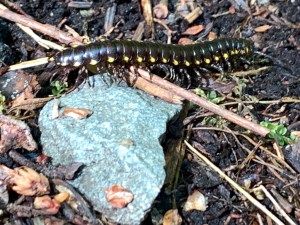
Some sort of millipede.
As we were on the old stagecoach trail. Only room for one vehicle (barely) in some spots.
Just south of Crescent City. We had the beach to ourselves. Huge potential for this city to become a major tourist town due to the awesome beach and the Redwood Parks nearby. I guess it used to be but a tsunami in 1964 wiped out most of the city and they never really recovered.
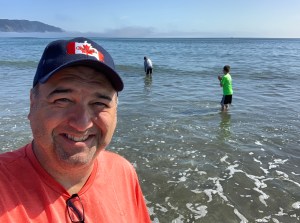
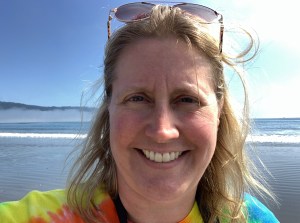
Beach selfie.
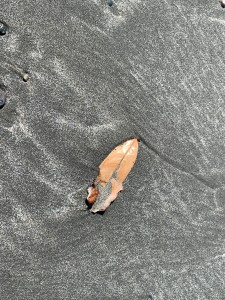
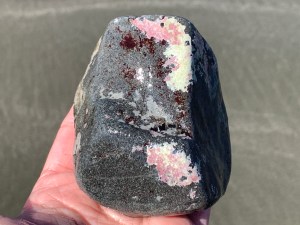
I found this unique gray, white, and pink rock in the sand.
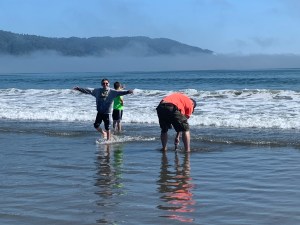
Jeff was putting the GoPro under water to film the waves. Stay tuned for the video once we get home!
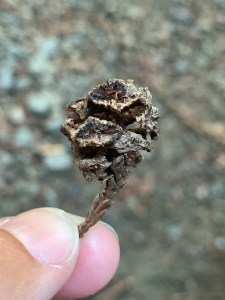
Hard to believe that those huge trees come from this tiny pine one.
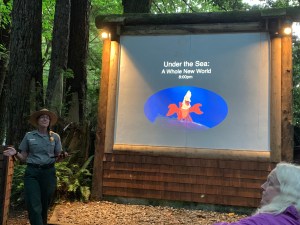
I love going to ranger talks when we stay at the National Parks (and also state parks and national forests sometimes have them). It makes things so much more interesting when you know what you are looking at. This talk was about the tide pools-a little late for this trip, but now I’ll know what to look for the next time we road trip to the ocean.
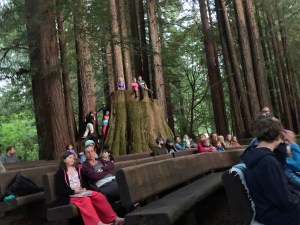
Most of the chairs were filled when the Ranger started and some kids loved sitting up on the ruins of the old trees.
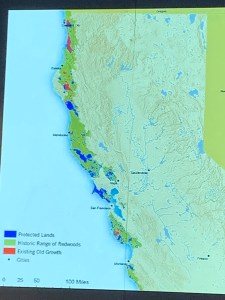
From the ranger presentation (who also talked a little bit about the trees, even though most of the presentation was about tide pools). This is the map of the historic range of the coastal Redwoods. The red part is all that remains-about 5%.
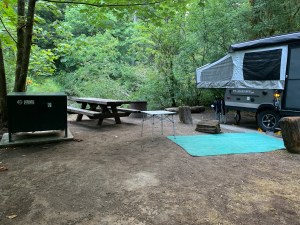
Our campsite was on a very small loop with only 3 other sites. It was huge and had the little creek behind it. Only 1 other site there was occupied the second night and the silence was so complete once everyone was sleeping. Until the jays started their really loud screeching at 6 in the morning.
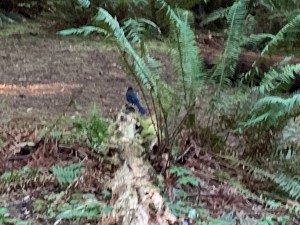
Here is a blurry photo of the Stellar’s Jay. Brilliant blue and bigger than the ones found in WI. And louder by far.
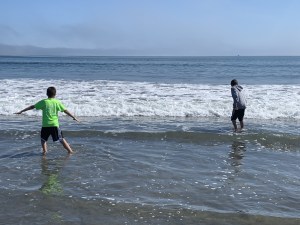
Boys and water? We should have brought our swimsuits! Playing in the waves.
There is a river behind our campsite, not much water in it now though. Carson was tossing stones in it and Jeff brought his lawn chair down to sit and read by it. Lots of huge blue jays flying around and squawking loudly.
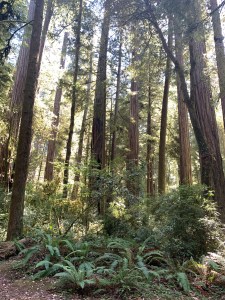
I love how the light filters down to the forest floor.
Looks like Endor from Star Wars: Return of the Jedi right? The planet that the Ewoks lives on? You would be correct if you said yes, because that was filmed on old growth privately owned land right next to the Parks. The Park Ranger told us for the chase scenes, a guy strapped a camera to his chest and walked around the forest for hours. Then they sped it up to make the scenery go by quickly. Now that’s easy to do with a Go Pro, but back then it wasn’t so easy.






 Kline Road Trips